

For Mackay Regional Council, improving pool vehicle bookings was not just about making it easier to reserve a car. It was about knowing who had access to the vehicle when it mattered.
Before the change, a staff member could book a pool vehicle, arrive to collect it, and find the key had already gone.
The booking existed. The vehicle did not.
For Danielle Houston, Fleet Coordinator at Mackay Regional Council, the issue was not only inconvenience. It was accountability. If a speeding fine, complaint or incident came through, Fleet needed to know who had the vehicle at the time. Under the old process, that was not always clear.
“The system might say Joe Bloggs had the car, but Timmy took it,” Danielle said. “Not knowing who is fundamentally driving it makes it really hard.”
That uncertainty created real friction. If the booking record did not match the person who had taken the key, Council could be left trying to work backwards after the fact.
“Our biggest issue was that we didn’t have lockers,” Danielle said. “People would say, ‘I need a vehicle’, see the keys, take one, and then someone who had actually booked the vehicle couldn’t access it.”
With pool vehicles spread across multiple locations, some sites managed themselves well. Others needed a more structured process. Without controlled key access, Fleet could not be confident that the person who booked the vehicle was the person who drove it.
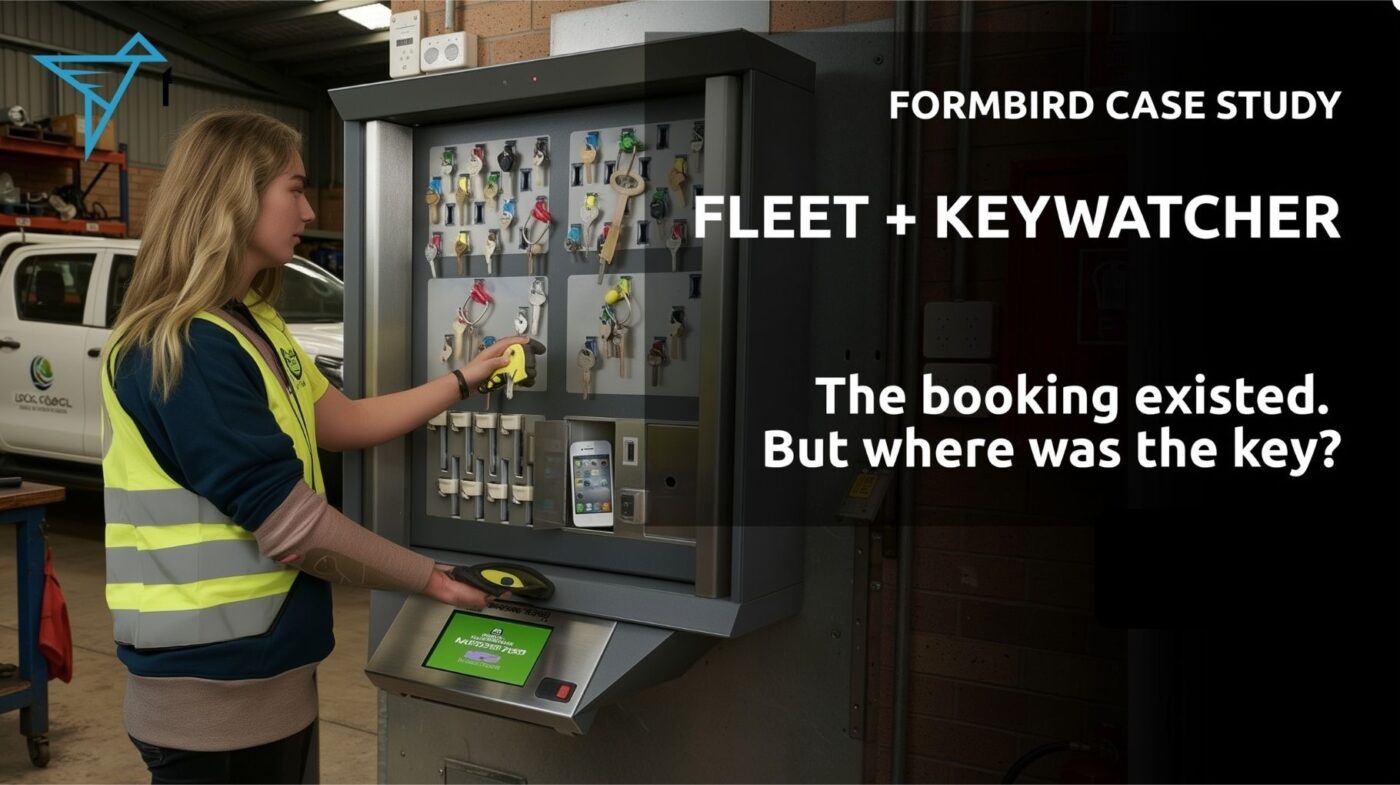
Council has now introduced a booking and key management workflow using Formbird FLEET Booking and KeyWatcher Lockers, linking the vehicle booking with physical key access.
Staff book a vehicle, collect the assigned key from the cabinet, and return the key when the booking is complete. The booking and key movement are now part of the same accountability trail.
A booking shows intent. A key cabinet confirms access.
For Mackay, the new process also helped make the rules clearer. Responsibility stays with the user until the key is returned through this approved process.
Danielle said that once Council explained that keys had to go back into the locker, behaviour changed quickly.
“If the next person gets a speeding fine, you are responsible because you’re responsible for the keys and the vehicle, until the key is returned to the locker,” she said.
Staff stopped handing keys directly from one person to another and began returning them properly, so the next user could collect the key through the system.
For Danielle, the benefit is not just compliance. It is also fairness.
The old arrangement, she said, had become “a free-for-all”. It worked for some people, but not for staff who had followed the process and expected a booked vehicle to be available.
The new process gives Fleet a clearer view of bookings, returns and exceptions. If a key is overdue, or if something has not been returned as expected, the team has better information to act on.
“If we don’t know, we can’t action it,” Danielle said.
Mackay has also kept the user experience simple. Staff access the booking page through Single Sign-On, view available vehicles, make a booking and receive confirmation without needing to understand the systems behind it.
“For an external user, it is a one-page, one-stop shop,” Danielle said. “They can view it all.”
The rollout brought some practical lessons. Mackay created internal training materials and a central booking information page to help staff understand the new process. There was some early handholding, and some users tested the boundaries.
One example was longer bookings. When Mackay introduced a standard 48-hour booking limit, some users pushed back. Longer bookings now go through Fleet and require manager approval, giving the team better visibility of vehicle demand and availability.
Danielle said the implementation was delivered under tight timeframes, and that more time for internal mapping and scoping would have helped. Her advice to other councils is simple.
“Have a clear definition of your first round of vehicles to go in,” she said. “Then have a clear definition of what you want it to look like in six months.”
For Mackay Regional Council, the project did more than replace an old booking process. It connected booking, key control and responsibility into one workflow.
Pool vehicle booking is not just about choosing a car from a calendar. It is about knowing who took the key, when they returned it, and whether the next person can rely on the vehicle being there.
Make pool vehicle bookings more accountable
Formbird FLEET connects vehicle bookings with controlled key access, helping organisations improve availability, visibility and accountability across their pool fleet.
Talk to us about a smarter pool vehicle booking process.
